

CALL ME A RADICAL!
When nothing is wrong, everything becomes permissible. When everything is permissible, nothing means anything.

My dearest incurable humanist,
Lately I’ve had this quote, often misattributed to Dante in my mind. It’s a modern paraphrase of Inferno III “the hottest places in hell are reserved for those who, in times of great moral crisis, maintain their neutrality.”
We live in a time when everyone relativizes everything. When “it’s complicated” becomes an excuse from uncomfortable truths, and when speaking up is riskier than staying silent. We drown in polite ambiguity, and then wonder why our moral compass spins with no north.
I’m not here to play the morality police, nor do I believe I stand above anyone else. But I do believe that there is right and wrong. I’m not talking about taste (chocolate vs. vanilla), but about principles that hold civilization together: honesty, dignity, justice, courage. Today, even suggesting that some behaviors are wrong earns you the label “radical.” So be it. Call me a radical. When I was a teenager, caught up with trends, I used to think my father was too extreme. But with each passing year, as the fog of that propaganda lifts, I find myself agreeing with him more and more. And now, I don’t mind being called a radical either. More than anything, I wish I could tell him how right he was. He used to tell me, countless times, “One day you’ll look back and realize your dad was right.” I always brushed it off, convinced I knew better. But no; he was right, unmistakably right.
When nothing is wrong, everything becomes permissible. When everything is permissible, nothing means anything. We see this moral erosion everywhere; in politics that prizes performance over truth, in institutions that dissolve integrity into branding, in relationships where accountability has been replaced by self-justification.
Immanuel Kant coined the term “categorical imperative” to name a universal moral law binding on every rational being. At its center stands the good will: a steadfast resolve to do what is right for the sake of rightness itself. For Kant, genuine morality begins where inclination ends, when duty carries us beyond comfort, advantage, or desire. The moral worth of an action does not depend on how much happiness or utility it produces; a right action may lead to unhappy results, and a wrong action may happen to turn out well, without altering their moral status. Kant also argues that moral obligation presupposes freedom of the will. We must be capable of acting according to laws we give ourselves through reason. Because every rational agent shares this capacity for autonomous self-legislation, each person possesses equal worth and must be treated with unconditional respect. Hence, by this standard, morality is about being consistent and doing what’s right even when no one applauds.
Today there is a tendency to equate moral conviction with intolerance. We’ve replaced ethics with empathy as if understanding every motive washes away the ‘wrongness’ of actions. This doesn’t mean we should return to puritanism or moral authoritarianism. It means remembering that freedom requires boundaries. The same moral clarity that built human rights, that inspired abolition, suffrage, and resistance to tyranny, was born from the refusal to blur the line between good and evil.
So circling back to Dante, maybe even worse than being a “bad person” is remaining indifferent and choosing the comfort of neutrality. If morality now counts as extremism, then yes, by all means, call me radical.
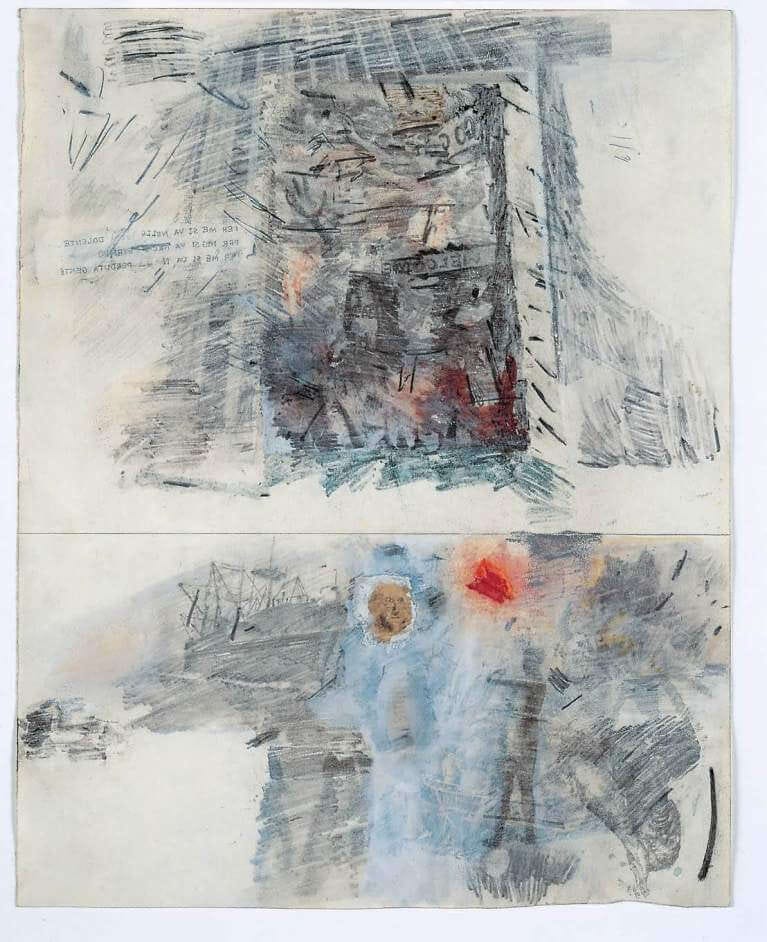
Final note: As you might have noticed, this week’s cover is Robert Rauschenberg’s Canto III: The Vestibule of Hell, The Opportunists — a small easter egg for next week’s newsletter on his series Thirty-Four Illustrations for Dante’s Inferno (1958–60).
Until next week!
(Read by the author. Theme song, The Incurable Humanist, by Carlos Escalona Cruz. All Rights Reserved 2025.)